Investing in residential upgrades is one of the most reliable ways to build long-term wealth, enhance daily comfort, and lower monthly overhead costs. However, not every home improvement yields an equal return on investment. For decades, standard renovation wisdom pushed homeowners toward purely cosmetic overhauls like imported marble countertops, elaborate crown molding, or luxury bathroom finishes. While these aesthetic touches make a property visually appealing, contemporary real estate trends have shifted buyer priorities substantially. Discerning buyers and sustainability-conscious homeowners now place an unprecedented premium on operational efficiency, resilient mechanical infrastructure, and low recurring operating expenses.
A truly smart renovation strategy strikes an intentional balance between structural integrity, lower environmental impact, and enduring market desirability. Upgrades that reduce electrical consumption, conserve potable water, and reinforce the building envelope pay immediate dividends in the form of slashed utility bills. At the same time, these functional improvements protect the physical structure against accelerated wear, moisture intrusion, and environmental degradation. When a home operates seamlessly and conserves natural resources, it naturally commands higher appraisal values and attracts competitive offers whenever it enters the housing market.
To maximize your return, you must approach residential remodeling through a comprehensive, whole-building lens. Rather than treating updates as isolated tasks, the most profitable strategy systematically addresses the exterior thermal barrier, indoor climate regulation, resource conservation, protective finishes, and ongoing mechanical upkeep. By investing thoughtfully across these essential domains, you create a home that minimizes waste, optimizes comfort, and preserves its financial equity for decades.
Assess Current Glass Performance and Upgrade for Maximum Thermal Resistance

Before committing capital to interior cosmetic modifications, inspect the condition of all exterior glass and framing units. Outdated wood, vinyl, or aluminum frames frequently suffer from broken thermal breaks, worn weatherstripping, or failed perimeter seals. These defects allow conditioned indoor air to escape while drawing in humid outdoor air.
- Conduct a thorough perimeter survey to detect drafts, condensation between glass panes, and wood rot around exterior sills.
- Prioritize replacement units that feature argon or krypton gas fills alongside low-emissivity glass coatings to minimize radiant heat transfer.
- Evaluate the National Fenestration Rating Council label, paying close attention to the Solar Heat Gain Coefficient and overall U-factor metrics.
- Partner with certified window installation companies to verify that rough openings are correctly flashed, insulated, and sealed against air infiltration.
- Install durable exterior storm windows over single-pane historic units to achieve similar thermal savings without altering architectural character.
Proper installation is just as critical as glass quality. Even the most advanced triple-pane window will underperform if gaps between the jamb and the wall framing remain improperly insulated. Reputable installers use low-expansion foam and high-grade exterior sealants to form an airtight boundary that protects wall cavities from hidden moisture.
Apply Solar Control Films to Mitigate Peak Cooling Loads
For homeowners who already possess sound double-pane glass, full replacement may not offer an immediate financial payback. In these situations, solar control window film provides a highly cost-effective alternative to lower cooling demands and protect interior finishes from sun damage.
- Install specialized architectural films on south-facing and west-facing exposures to block up to eighty percent of incoming solar radiation.
- Select ceramic or spectrally selective films that deflect infrared heat while allowing abundant natural daylight into your living spaces.
- Safeguard hardwood flooring, custom cabinetry, and upholstered furniture from irreversible ultraviolet discoloration and premature fading.
- Contract professional residential window tinting services to ensure the material is installed without bubbling, peeling, or voiding existing manufacturer warranties.
- Utilize spectrally selective safety films on ground-floor glass to enhance home physical security while simultaneously repelling solar heat.
Solar films act as an invisible thermal shield, significantly reducing the burden on your central cooling system during sweltering summer afternoons. By moderating room-by-room temperature spikes, you increase indoor comfort while noticeably lowering monthly power expenditures.
Schedule Seasonal Diagnostics to Restore Mechanical Efficiency
Heating and air units operate under rigorous environmental stress. Over a year of service, dust and debris accumulate on coils, blower wheels, and filters. This buildup restricts airflow, forcing motors to work harder and consume more power.
- Replace standard air filters every sixty to ninety days with high-capacity pleated models to sustain steady internal airflow.
- Inspect ductwork joints for physical disconnects, holes, or unsealed seams that allow conditioned air to bleed into unconditioned attics or crawlspaces.
- Calibrate smart learning thermostats to automatically adjust setpoints during working hours and overnight sleep intervals.
- Hire a licensed hvac technician to clean internal coils, lubricate blower motor bearings, and evaluate electrical voltage draws across major capacitors.
- Clean outdoor condensing unit fins and clear surrounding vegetation by at least two feet to ensure uninhibited heat dissipation.
Professional testing ensures your system operates at its optimal coefficient of performance. Qualified specialists can spot microscopic refrigerant leaks before they trigger compressor burnouts, preventing costly emergency replacements during extreme weather events.
Resolve Furnace and Boiler Faults Early to Prevent Premature Breakdown
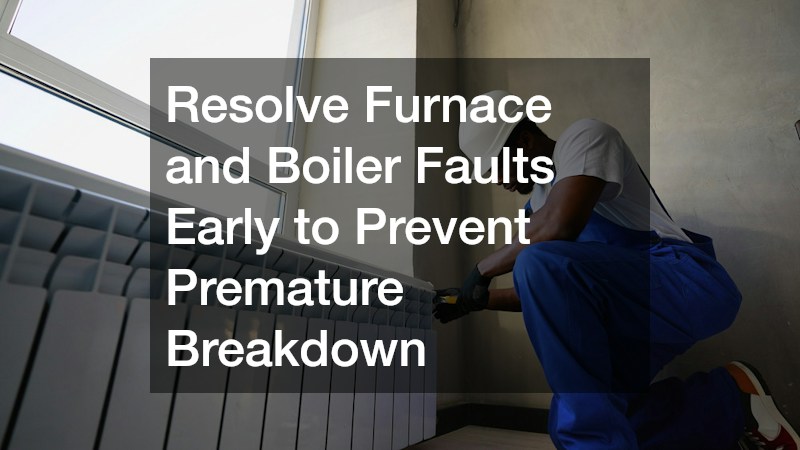
Minor mechanical anomalies within your heat source frequently signal deeper underlying problems that worsen under sustained winter workloads. Disregarding subtle warnings—such as short cycling, persistent metallic vibrations, or delayed burner ignition—invariably leads to catastrophic equipment failures when outdoor temperatures drop below freezing.
- Pay attention to uneven room temperatures, soot accumulation around burner ports, or faint acrid odors during heating cycles.
- Test safety switches, limit controls, and carbon monoxide detectors before the start of each winter season.
- Arrange for timely heating repair to fix compromised ignition assemblies or failing circulator pumps before minor mechanical wear turns into total system breakdown.
- Seal perimeter supply registers with heat-resistant foil tape to ensure maximum heat delivery into primary living zones.
- Insulate exposed hot water and steam heating supply pipes in unconditioned basements to preserve thermal energy during transit to living spaces.
Addressing small performance hitches promptly protects the longevity of expensive heat exchangers. More importantly, keeping burners properly tuned ensures fuel is burned cleanly and completely, reducing waste and safeguarding family health.
Purify the Domestic Supply to Shield Infrastructure and Promote Health
Untreated tap water frequently contains heavy minerals, sediment, chlorine, and harsh dissolved solids that shorten the operating lifespan of mechanical water-using fixtures. When calcium and magnesium precipitate out of hard water, they create dense mineral scaling inside water heaters, dishwasher heating elements, and washing machine valves. This insulating layer of scale forces heating elements to run hotter and longer to achieve desired temperatures, wasting considerable energy.
- Test incoming water hardness, dissolved mineral totals, and potential volatile organic compound concentrations.
- Integrate a comprehensive point-of-entry home water filtration system to catch particulate contaminants before they enter the interior distribution network.
- Protect hot water tanks and tankless heat exchangers from internal limescale accumulation, preserving original thermal transfer efficiency.
- Provide clean, purified drinking water at every tap, eliminating the financial expense and plastic waste associated with bottled water.
- Incorporate an automated secondary sediment pre-filter to catch coarse municipal debris and extend the life of primary filtration media.
Beyond structural protection, integrated purification represents a major selling point for modern homebuyers who value health, wellness, and environmental stewardship.
Integrate Modern Flow Management to Mitigate Water Waste
Subtle leaks within supply valves, pressurized lines, and toilet flush assemblies can quietly waste hundreds of dollars each billing cycle. Replacing outdated fixtures with modern pressure-compensating models drastically reduces consumption without sacrificing spray force or convenience.
- Swap legacy toilet tanks for dual-flush or high-efficiency models that use 1.28 gallons per flush or less.
- Retrofit aerators onto bathroom and kitchen faucets to introduce microscopic air bubbles that optimize volume perception while cutting water use in half.
- Install smart water-shutoff monitoring units that track flow anomalies and shut down the main supply line when abnormal flow patterns are detected.
- Upgrade aging copper or galvanized pipe assemblies with durable modern plumbing materials to eliminate pinhole corrosion and prevent structural water damage.
- Audit outdoor irrigation zones and convert standard sprinkler spray heads to precision drip emitters to curb landscape water evaporation.
Upgrading legacy distribution lines ensures steady water pressure, protects subfloors from moisture damage, and reassures property inspectors during resale transactions.
Select Light-Reflective Formulas to Brighten Interior Spaces

The color and finish applied to interior walls directly affect how natural daylight and artificial illumination behave across living spaces. Dark or flat finishes absorb light, requiring homeowners to run supplemental overhead fixtures throughout daytime hours. Conversely, premium coatings with higher Light Reflectance Values bounce ambient sunlight deeply into room interiors, drastically reducing daily electricity requirements.
- Prioritize low-VOC and zero-VOC paints to preserve clean indoor air quality and eliminate lingering chemical fumes in well-insulated rooms.
- Select satin or eggshell finishes in high-traffic hallways to balance light reflection with cleanability and moisture resistance.
- Choose neutral, daylight-amplifying color schemes such as warm whites and soft grays to make compact square footage feel open and expansive.
- Collaborate with established interior painting contractors who possess the professional equipment to deliver crisp trim lines and flawless drywall repairs.
- Prime patched areas with specialized high-hiding stain sealers to prevent previous paint discolorations from telegraphing through fresh coats.
Professional surface preparation ensures seamless adhesion and prevents premature flaking. Seasoned craftspeople expertly fill hairline drywall fractures, apply stain-blocking primers, and ensure wall surfaces reflect light uniformly.
Fortify the Exterior Façade Against Environmental Exposure
Exterior siding and architectural trim endure relentless ultraviolet exposure, wind-driven rain, and freezing temperatures. When exterior coatings begin to chalk, peel, or blister, moisture rapidly penetrates wooden wall studs and masonry foundations, setting the stage for structural decay.
- Inspect siding panels, fascia boards, and window trim annually for signs of moisture penetration, wood rot, or mold discoloration.
- Choose elastomeric or acrylic latex coatings that expand and contract smoothly across fluctuating seasonal temperature extremes.
- Seal perimeter joints around exterior penetrations with marine-grade exterior sealants to halt air infiltration and driving rain intrusion.
- Engage skilled painting contractors who thoroughly pressure wash surfaces, scrape failing layers, and prime exposed bare wood before applying durable exterior finishes.
- Apply breathable masonry sealants to exposed exterior brick and stone foundations to block wind-driven rain while releasing interior vapor.
A properly applied exterior coat acts as an impenetrable shield against wood-destroying fungi and harsh elements, preserving the underlying building framing while boosting curb appeal.
Clear Waste Conduits to Protect Structural Foundations
Sluggish drains are often treated as minor daily annoyances, but they frequently signal severe obstructions lurking deeper inside underground pipes. Over years of use, soap scum, fats, food debris, and invasive subterranean tree root systems constrict the internal bore of subterranean pipes. When waste lines clog completely, the resulting hydrostatic pressure can crack pipe walls or trigger backflows into basements, creating devastating structural and biohazard damage.
- Avoid caustic chemical bottle cleaners that chemically corrode metal pipes, damage plastic joints, and introduce toxic compounds into local groundwater.
- Install mesh strainers across all shower, sink, and tub drains to trap stray hair and debris before they enter wastewater lines.
- Treat residential branch drains with enzymatic biological cleaners monthly to safely break down organic biological sludge and grease accumulation.
- Schedule periodic professional drain cleaning using high-pressure hydro-jetting equipment to strip away hardened mineral scale and invasive roots.
- Inspect exterior rooftop vent stacks to ensure leaves, bird nests, and environmental debris do not restrict necessary drainage air pressure.
Restoring waste pipes to their full internal diameter prevents water backups, eliminates foul sewer gas leaks, and protects concrete foundations from moisture seepage.
Service Heavy-Draw Appliances to Restore Electrical Efficiency
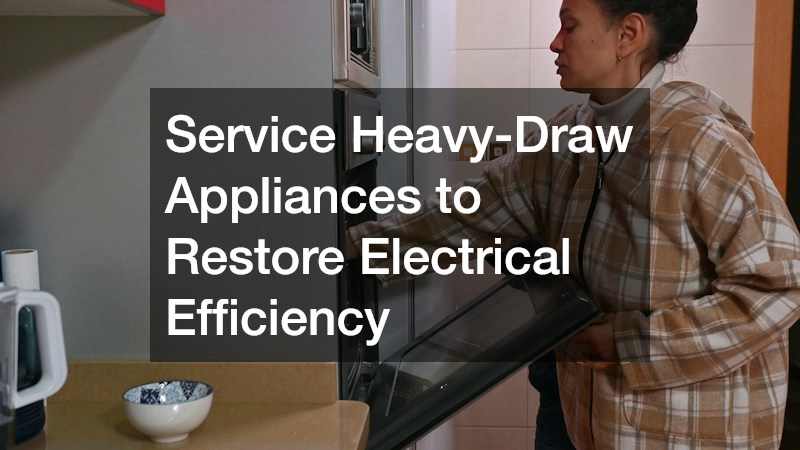
Major household machines—including refrigerators, washing machines, clothes dryers, and dishwashers—account for a substantial share of total home electrical and water use. As internal belts, drive motors, and door gaskets wear down, these appliances must consume significantly more energy to complete routine operating cycles.
- Vacuum dust and pet hair from refrigerator condenser coils every six months to sustain optimal compressor cooling efficiency.
- Clean lint accumulation from exterior clothes dryer exhaust ducts annually to lower drying run times and eliminate potential fire hazards.
- Inspect rubber door seals on refrigerators, ovens, and dishwashers with the dollar bill test to verify airtight closures.
- Invest in targeted appliance repairs when sensors, heating elements, or mechanical switches malfunction, extending machine life and avoiding premature replacement costs.
- Check washing machine flexible rubber fill hoses for blistering or cracking, replacing them with braided stainless steel lines to avoid catastrophic floods.
Keeping high-draw units operating smoothly prevents waste, extends equipment lifespan, and safeguards monthly utility budgets from unexpected spikes.
Achieving high property values while driving down operating overhead does not require unguided, budget-draining remodeling ventures. Instead, true real estate value comes from a methodical, holistic focus on infrastructure integrity, environmental efficiency, and durable finishes. By reinforcing your structural perimeter, tuning indoor climate equipment, modernizing water delivery networks, applying protective surface coatings, and maintaining heavy-draw machines, you construct an enduring living space that pays ongoing dividends in daily comfort and operational savings.
Prospective homebuyers consistently reward homes that exhibit meticulous mechanical care, robust environmental defenses, and verified utility efficiency. Rather than being lured into superficial trends that quickly go out of style, direct your home improvement capital toward practical enhancements that produce measurable utility savings today and superior appraisal values tomorrow. Establishing a multi-year renovation roadmap centered on efficiency and preventative resilience ensures your property remains a comfortable, sustainable, and financially lucrative sanctuary for the long term.